
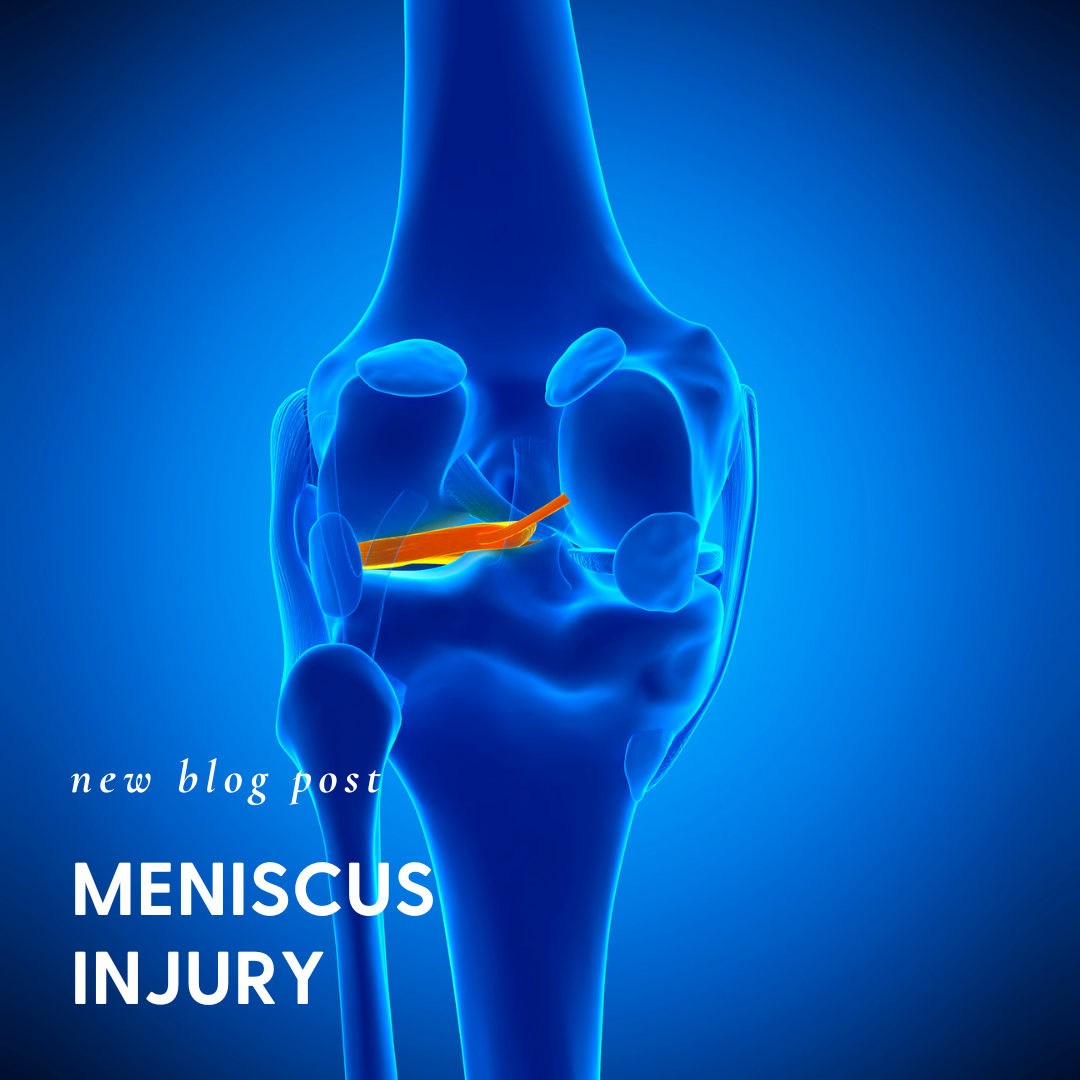
Meniscal Injury: Understanding Knee Pain and Your Treatment Options
A meniscal injury does not automatically mean surgery. Many meniscal problems improve with physiotherapy, particularly when the knee is stable and not truly locked.
What is the meniscus?
Each knee contains two menisci—curved pads of fibrocartilage that help distribute load, absorb force and support joint stability.
A tear may occur during a twisting injury, particularly in sport. Meniscal tissue can also change gradually with age and may appear torn on a scan without one clear injury.
Traumatic and degenerative tears
A traumatic tear generally follows a specific incident in a younger or active person. The knee may swell and feel painful with twisting, bending or weight-bearing.
A degenerative meniscal lesion develops gradually and often occurs alongside knee osteoarthritis. These findings are common on MRI and do not necessarily identify the sole cause of pain.
Common symptoms
Symptoms may include pain along the knee joint line, swelling, reduced bending or straightening and discomfort with squatting, kneeling, twisting or stairs.
Clicking is common and does not automatically require surgery. A truly locked knee—where a physical block prevents normal movement—is different and needs prompt assessment.
How is it assessed?
Your physiotherapist will ask about the injury, swelling, locking, giving way and activity goals. Assessment includes knee movement, tenderness, swelling, ligament stability, strength and functional tasks.
MRI may be useful when the diagnosis remains uncertain, symptoms suggest a repairable traumatic tear or surgery is being considered. A scan result alone does not decide treatment.
Physiotherapy is often the first treatment
Treatment begins with reducing swelling, restoring movement and maintaining comfortable activity.
Manual therapy, knee mobilisation and soft-tissue treatment can improve movement and pain where stiffness or guarding is present.
Exercise progressively rebuilds quadriceps, hamstring, hip and calf strength. Rehabilitation then advances to balance, squatting, running, change of direction and work or sport demands.
When is surgery considered?
Surgical review may be appropriate for a genuinely locked knee, a displaced or repairable acute tear, associated ligament injury or persistent disabling symptoms despite a good rehabilitation trial.
When surgery is needed, preserving and repairing the meniscus is generally preferred where possible. Physiotherapy remains important before and after the procedure.
Recovery expectations
Many meniscal problems improve with time, strength and progressive movement. Degenerative tears often respond particularly well to exercise-based care.
The goal is to treat the whole knee—not simply the MRI—and restore enough strength and confidence for the activities that matter to you.