
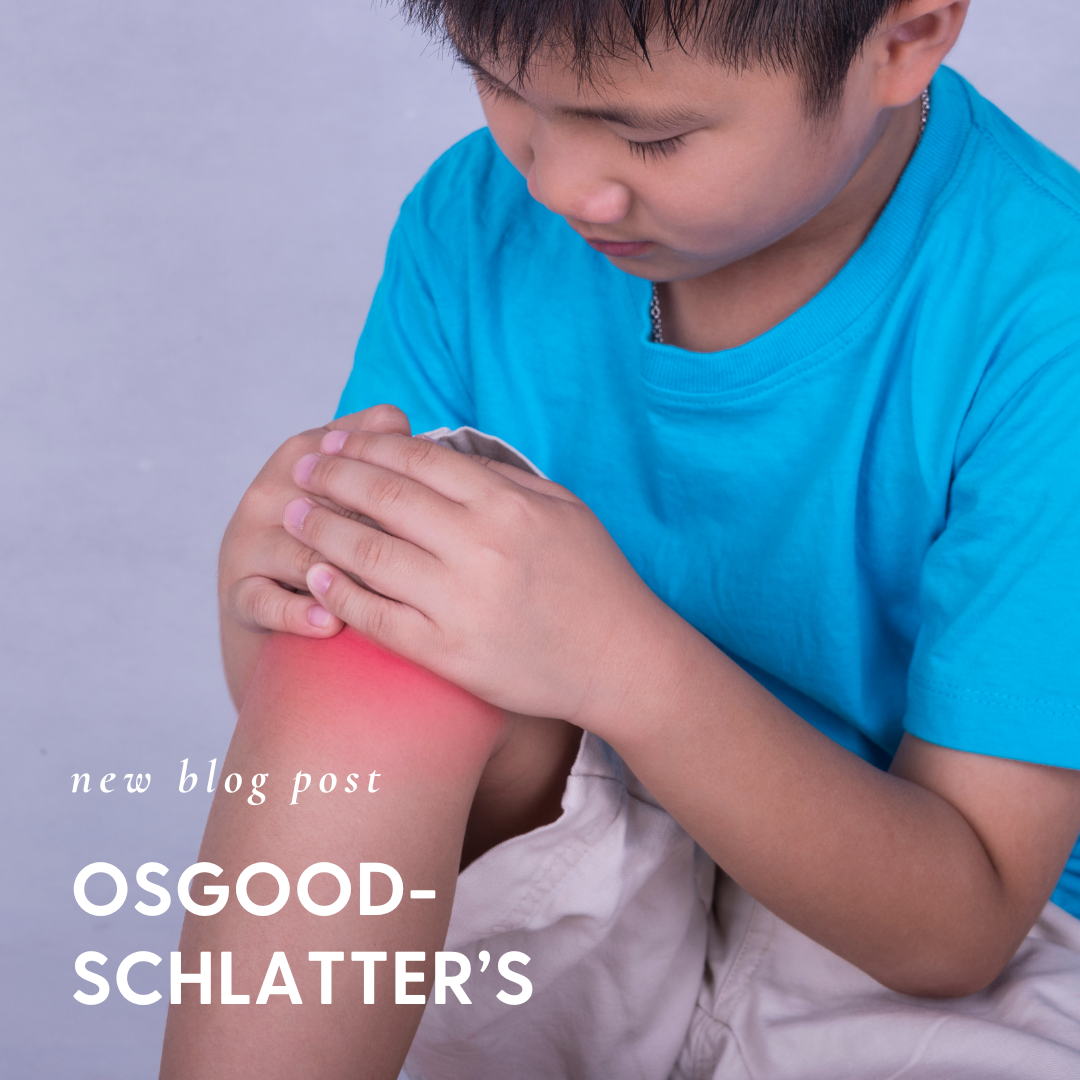
Osgood–Schlatter disease is a common cause of pain below the kneecap in active young people. It is not dangerous, but it can affect sport, confidence and everyday activity if it is not managed well.
What is Osgood–Schlatter disease?
The patellar tendon connects the kneecap to a growing area of shin bone called the tibial tubercle.
During growth, repeated running, jumping and kicking can make this attachment sensitive. A noticeable bony bump may develop below the kneecap and can remain after the pain has settled.
Typical symptoms
Pain and tenderness are normally felt directly over the bump below the kneecap. Running, jumping, squatting, kicking and kneeling may aggravate it.
Symptoms often flare during a growth spurt or after a rapid increase in training. One or both knees can be affected.
How is it assessed?
Diagnosis is usually clinical. The physiotherapist asks about growth, sport volume, recent training changes and how symptoms respond during and after activity.
The examination may include tenderness, knee movement, hip, knee and calf strength, flexibility, squatting, jumping and landing.
Imaging is not normally required unless there has been unusual trauma, symptoms are atypical or recovery does not follow the expected pattern.
How can physiotherapy help?
The aim is not necessarily to stop all sport. Physiotherapy creates a realistic plan with the young person, family and coach.
The most aggravating running or jumping loads may be temporarily reduced while tolerable activity and fitness continue. Pain later that day and the following morning helps guide the correct amount.
Manual therapy may include soft-tissue treatment for the thigh or calf and mobilisation of the hip, knee or ankle when stiffness affects movement. It may improve comfort, but it does not replace strengthening.
Exercise rehabilitation
Exercise may begin with isometric knee-extension work and comfortable functional movements.
Strengthening then progresses through squats, step exercises and resistance work for the knee, hip and calf. Running, jumping and landing are gradually reintroduced before unrestricted training and competition.
Straps, kneeling pads, footwear changes or ice may provide short-term relief but do not build capacity by themselves.
How long does it take?
The condition eventually settles as the growth area matures, but symptoms can last many months and may fluctuate.
Simply telling a young person to stop everything and wait can lead to lost strength and confidence. Sensible load management and progressive rehabilitation can reduce pain and keep them involved while growth continues.