
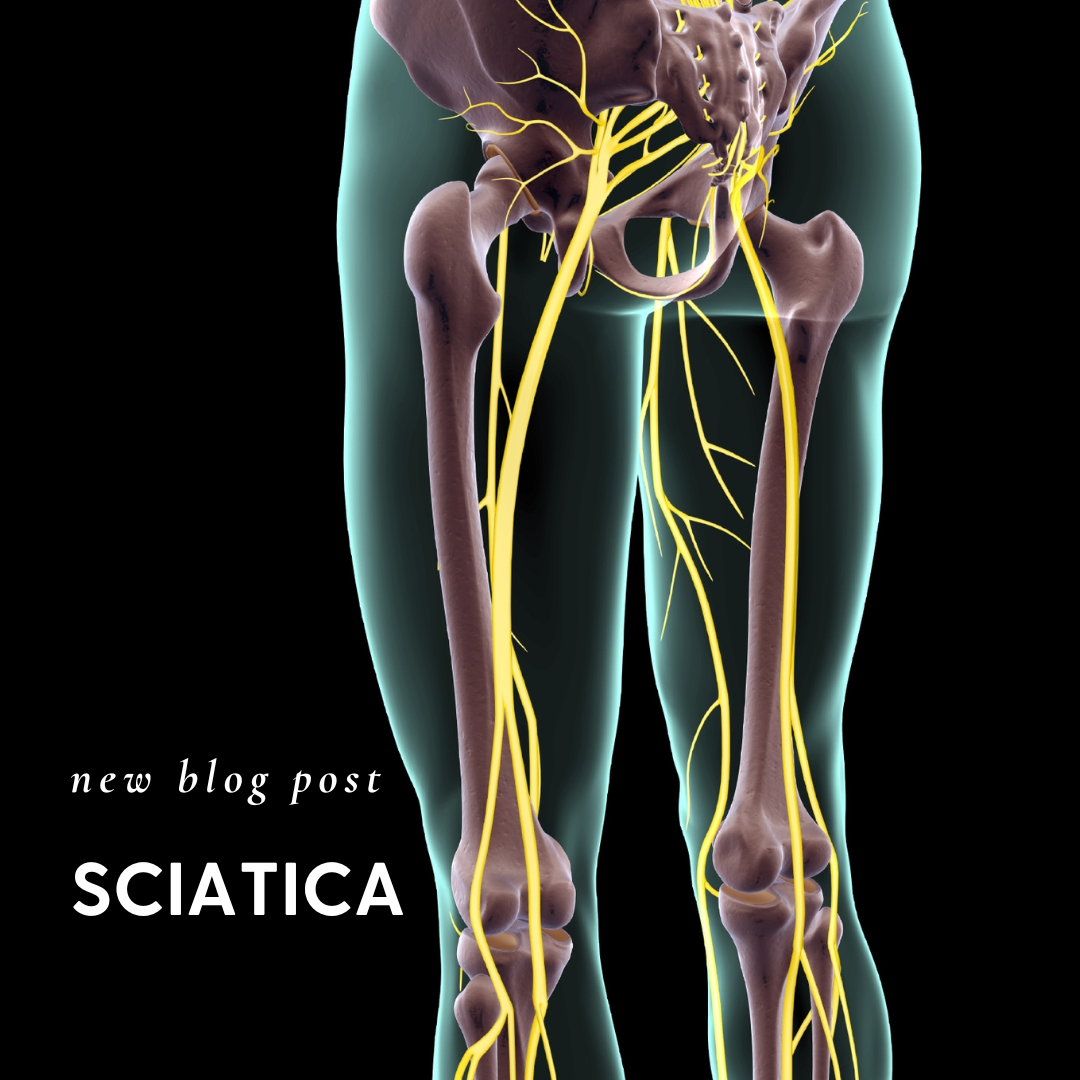
Sciatica describes pain caused by irritation or sensitivity of a nerve supplying the leg. It can be uncomfortable and frightening, but many cases improve without surgery.
What causes sciatica?
Possible causes include irritation around a spinal disc, narrowing around a nerve, age-related spinal changes or inflammation and sensitivity near the nerve root.
Sometimes assessment can identify the most likely source. In other cases, it is impossible to be completely certain—and that is okay. The initial treatment is often similar because it is guided by symptoms, function and neurological findings rather than a label alone.
Typical symptoms
Pain may travel from the back or buttock down the thigh, calf or foot. Pins and needles, numbness or altered sensitivity can also occur.
Symptoms may change with sitting, bending, walking, coughing or particular spinal movements. True sciatica generally travels below the buttock and follows a nerve-related pattern rather than being ordinary referred back pain.
How is it assessed?
Your physiotherapist will ask about the pain distribution, aggravating movements, numbness, weakness and changes in bladder or bowel function.
Assessment may include spinal movement, nerve provocation tests, reflexes, sensation, muscle strength and walking.
Urgent assessment is required for new bladder or bowel dysfunction, numbness around the saddle region, rapidly progressing weakness or severe symptoms affecting both legs.
How can physiotherapy help?
Treatment begins by identifying positions and activities that settle or aggravate the nerve. Temporary activity modification can reduce repeated irritation without requiring prolonged rest.
Manual therapy and soft-tissue treatment may improve spinal movement and reduce protective muscle guarding. Nerve-mobilisation exercises can help the nerve move more comfortably when appropriately selected and dosed.
Exercise rehabilitation gradually restores spinal, hip and leg movement and strength. Walking, lifting and work or sport tasks are progressively rebuilt.
Will I need a scan or surgery?
Imaging is considered when serious pathology is suspected, neurological loss is significant or treatment decisions would change. Many scan findings are common and do not automatically require surgery.
Most people improve with non-surgical care over several weeks to a few months. Surgery may be considered for severe or progressive weakness or persistent disabling pain that does not improve with appropriate treatment.
The key is to monitor neurological function, keep moving at a tolerable level and progressively rebuild normal activity.